
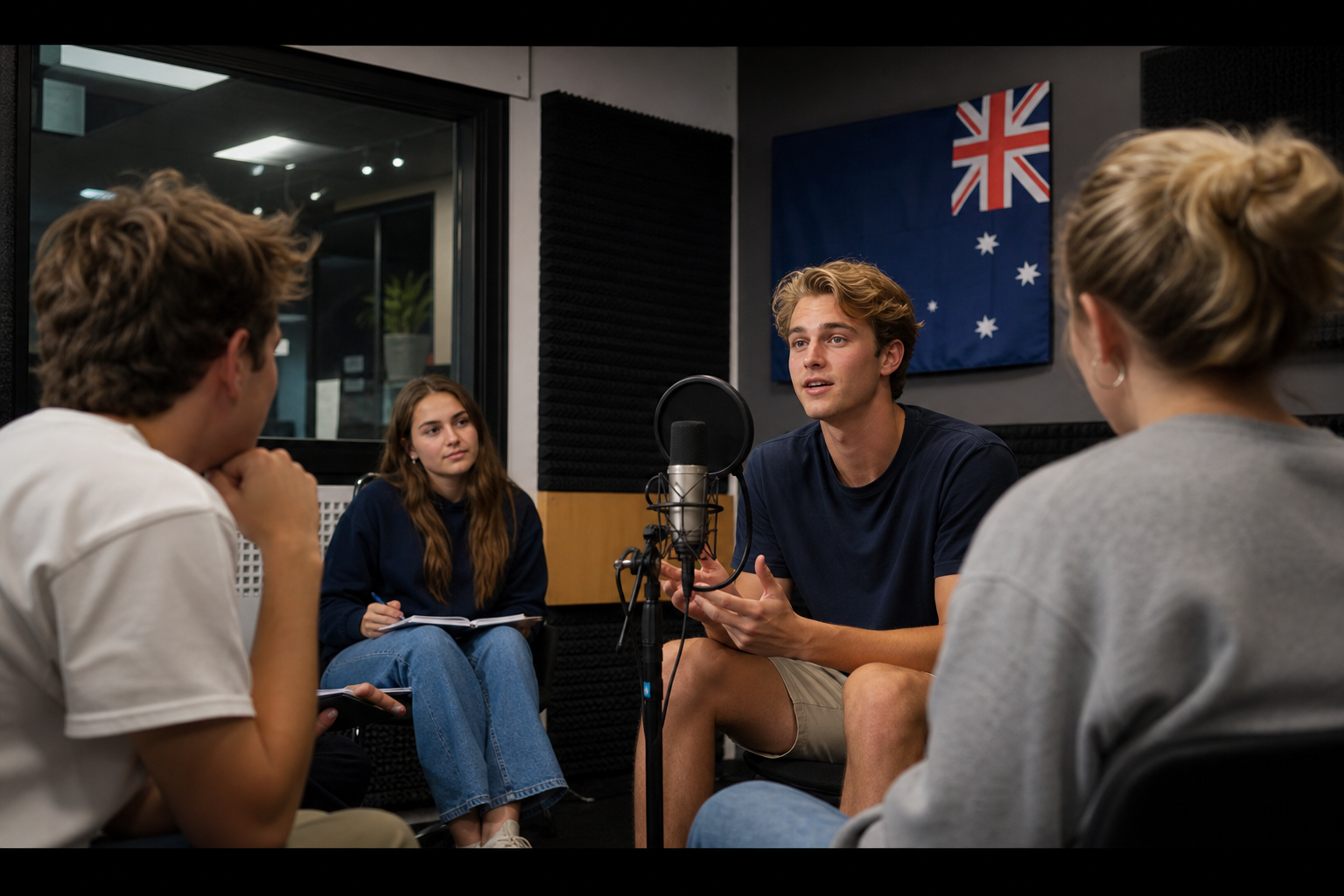
Most speaking marks are lost in the first fifteen seconds — not because candidates lack vocabulary, but because they treat the microphone or examiner like an audience to impress rather than a listener to inform. At H&H Academy we see the same pattern across Sydney and Parramatta test centres: strong readers and writers who freeze when the recording light turns on, or who deliver polished monologues that never answer the question. This guide covers item-specific tactics for Australian sittings, booth technique for computer-delivered tests, and recovery habits you can drill at home before your next attempt.

Stop rehearsing in your head
Silent practice feels productive because you never hear the gaps. Real speaking preparation needs sound: your voice, a timer, and a rubric. Record five Describe Image attempts on your phone and listen back with the PTE oral fluency descriptors open. Count how many seconds pass before you state a main trend. If it is more than twelve, your opening is costing you marks before content even begins.
IELTS candidates at centres in Hornsby or the CBD face a different pressure — eye contact, note paper, and an examiner who may interrupt in Part 3. Practise with a friend seated across a table, not alone at a screen. OET nursing candidates should run role-plays standing up, as you would in a clinic room, because posture changes breath support and pace.
- Speak out loud daily, even for ten minutes. Read Aloud and Repeat Sentence items punish mouth memory you have not built.
- Match prep time to the exam. Forty seconds for an IELTS cue card is not long enough to write a script — four keywords maximum.
- Finish inside the window. Trailing off after the beep hurts fluency; a short, complete answer beats an elaborate one that collapses.
- One pronunciation target per week. Final consonants, word stress on multi-syllable nouns, or th/s distinction — not all three at once.
- Log fillers without shame. Mark every "um" on playback; cut them in the next attempt by slowing the first sentence only.
IELTS Parts 2 and 3: notes that actually help
Part 2 rewards a clear arc: where you were, what happened, why it mattered. A cue card asking you to describe a bushwalk you enjoyed near Sydney gives you licence to name one trail, one difficulty, and one feeling — not a tourism brochure of every national park in NSW.
Write on the notepad in vertical columns: place · event · feeling · wrap-up. Speak from those triggers. In Part 3, answer the question in the first sentence — "I think local councils should fund more tracks, yes" — then explain. Examiners penalise elegant detours that never commit to a position.
Australian English is fully acceptable. Say "mob" only if it fits naturally; you are not marked down for flat vowels or local place names like Woolloomooloo if the listener can follow you. Clarity beats performance.
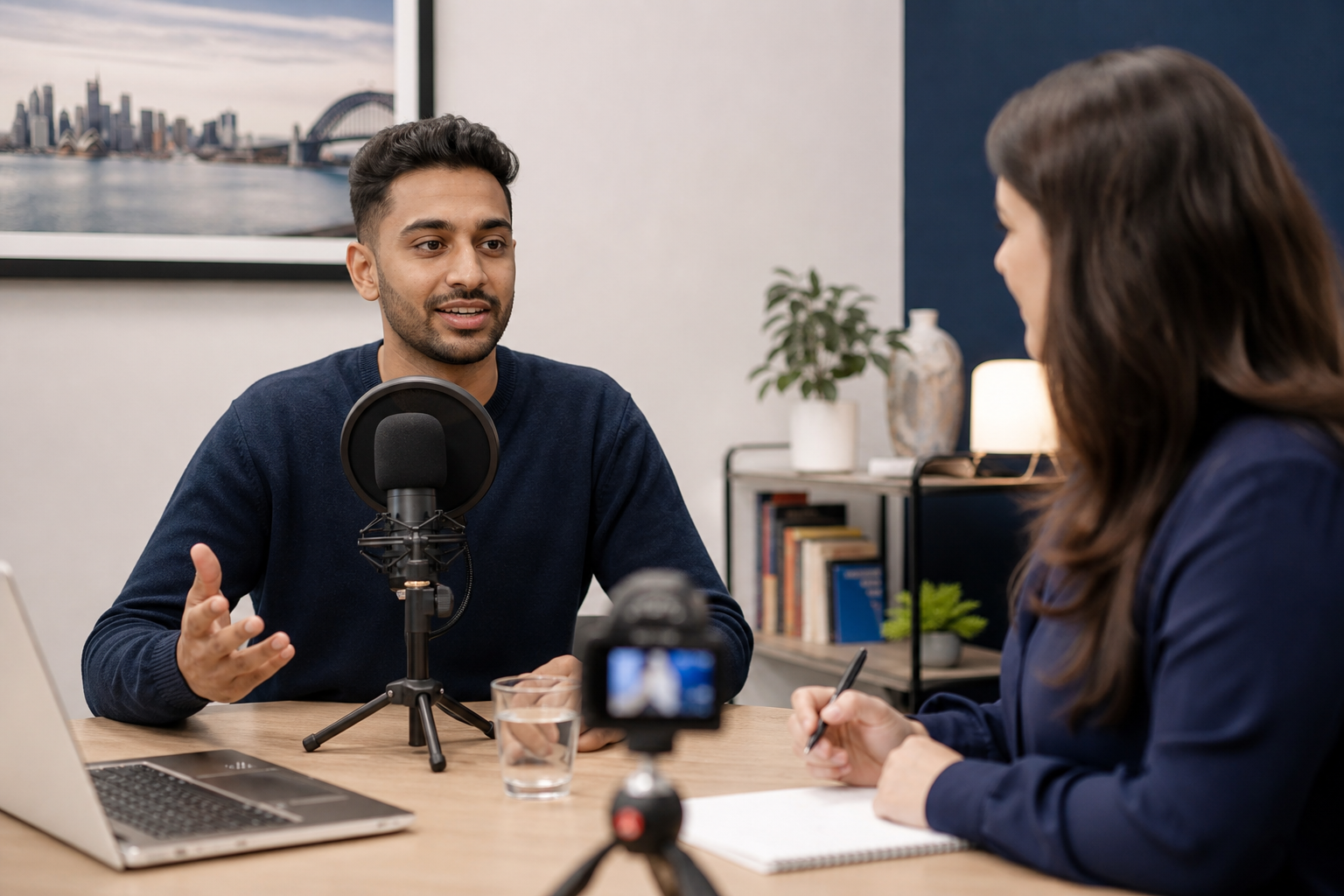
PTE Academic: booth habits that travel to test day
Pearson centres in Chatswood, Melbourne CBD, and Brisbane use partitioned booths with shared ambient noise. Candidates whisper because they hear neighbours; the microphone then captures breathy, thin audio. Sit upright, speak at the volume you would use in a GP waiting room, and keep your mouth a consistent distance from the mic.
Read Aloud is not a speed contest. A passage mentioning "Canberra" and "Tasmania" needs pauses at commas and falling intonation at full stops. Racing collapses phrasing and drags oral fluency down even when every word is technically present.
Describe Image: state the graph type, two comparisons, and a conclusion. Retell Lecture: your notes should be abbreviations — "1980s ↑ rainfall" — not sentences you try to read. Repeat Sentence rewards immediate echo; hesitate more than two seconds and the item is gone.
Our PTE Coaching program reviews booth recordings from portal mocks so you fix technique before the $400+ sitting fee.
OET speaking: AHPRA-ready communication
Nurses and allied health professionals sitting OET for AHPRA registration need warm, professional speech — not theatrical empathy. A role-play about a patient confused about a PBS medication subsidy requires you to explain simply, check understanding, and close with a sensible next step. Memorised sympathy phrases ("I completely understand how frustrating this must be") sound hollow when repeated every card.
Listen for the concern underneath the prompt. A carer asking about respite services in regional Victoria needs practical options, not a lecture on policy. Grade B speaking demands intelligibility and task fulfilment, not a British accent.
Pair OET role-plays with OET Training feedback sessions; self-assessment rarely catches professional register slips.
When you lose your thread
Do not apologise at length or restart from the top. Bridge with "The main point I want to make is…" and deliver one clean idea. If a word fails, describe it — "the chart showing hospital admissions" — and keep moving. Examiners and algorithms both reward forward motion more than perfection.
A four-week speaking block before you rebook
Week 1: daily Read Aloud or Repeat Sentence, recorded. Week 2: add Describe Image or IELTS Part 2 cards with strict prep timers. Week 3: one live mock with a coach; annotate only fluency and intelligibility, not every grammar slip. Week 4: full speaking module under fatigue — after a reading practice, not fresh at 9 a.m.
Track scores from portal mocks alongside official results. If speaking lags while writing holds steady, the issue is usually delivery mechanics, not ideas. For timed writing under the same exam pressure, see writing under exam conditions. To understand how speaking scores combine with other skills on your report, read understanding exam score calculation.
Back to Blog Book a ConsultationConfirm current English thresholds with the Department of Home Affairs, your university, or AHPRA before you book your test.