

A well-planned essay written at the kitchen table is not the same document as one produced after ninety minutes of reading and listening, on a unfamiliar keyboard, with twenty minutes left on the clock. H&H Academy learners across NSW often tell us their ideas are fine but their scores stall on coherence, word limits, or missing letter details. This article is about the mechanics of writing when time and stamina are fixed — how to budget minutes, keep paragraphs purposeful, and leave room for a targeted edit before you submit.
The non-negotiable rule
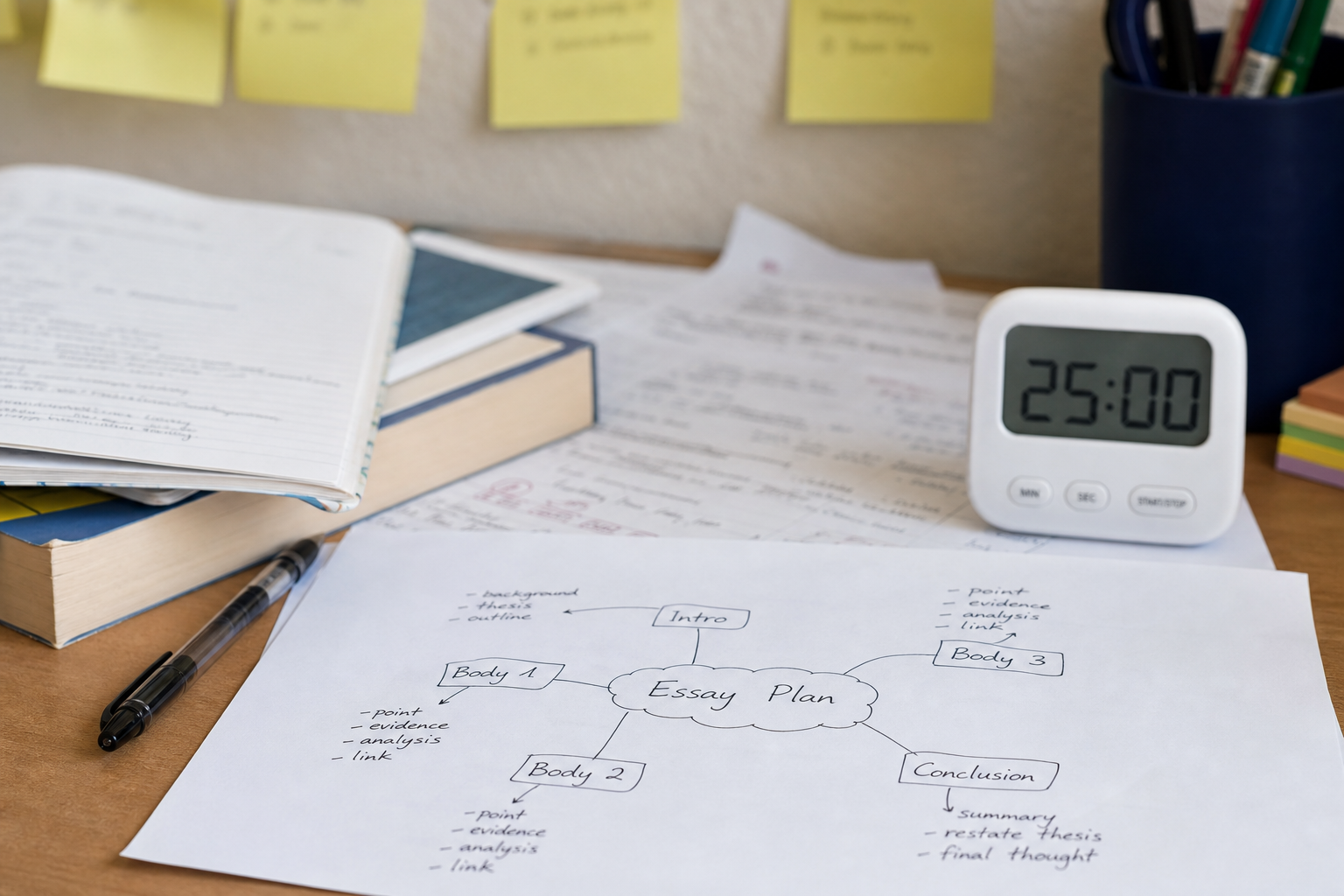
Drafting and editing are separate passes. Mixing them — rewriting sentence one while paragraph three is still empty — is the fastest way to hand in an unfinished Task 2 or an OET letter that never names the referral purpose. Plan, write through, then proofread with a checklist. That sequence is boring. It works.
Minute budgets that match each task
IELTS Academic Writing (60 minutes): Task 1 gets twenty minutes, not twenty-five. Three minutes to select two trends and one comparison for a graph of Australian electricity generation; two minutes for a clear overview paragraph before body detail; the last two minutes for number and article checks. Task 2 gets forty minutes: six minutes planning, thirty writing, four proofreading. Two developed body paragraphs beat four thin ones.
PTE Write Essay (20 minutes): Four minutes to outline position, two reasons, and example each. Automated scoring punishes repeated template phrases and grammar slips more than a missing clever idiom. Summarise Written Text: one sentence, five to seventy-five words — circle the subject and main verb in the source before you merge clauses.
OET letter (45 minutes): Five minutes reading case notes and underlining three tasks the bullet points require. Map each task to a paragraph. A referral to a Sydney cardiologist still needs the patient DOB, presenting complaint, and requested action — speed is useless if the GP's name is wrong.
- Answer the question in line one of Task 2. "Remote work benefits employers and employees" is a position; background about COVID is not.
- Overview before detail in Task 1. Without it, coherence caps regardless of accurate figures.
- One finite verb chain in PTE summaries. Comma splices are the most common automatic fail.
- OET tone: formal, direct, humane. "Please find enclosed" beats slang; "mate" never belongs in a discharge letter.
- Stop when the timer says stop. Training with hard stops builds the habit of reserving edit time.
Australian English on the page
IELTS accepts Australian and British spelling — colour, organise, centre — provided you do not switch mid-essay. A paragraph that alternates "labor" and "labour" signals carelessness, not range. PTE's spell-check is limited; learn your high-risk words (accommodation, government, separate) from portal error logs.
Task 2 prompts about regional development, skilled migration, or university HECS policies appear often in Australian contexts. You do not need local statistics memorised — a plausible example about apprenticeships in Western Sydney or healthcare access in rural Tasmania is enough if it supports your argument clearly.
Do not import five-syllable words you cannot define. Examiners reward precision. "Mitigate" used correctly beats "ameliorate" pasted from a template list.
Paragraphs that hold up under pressure
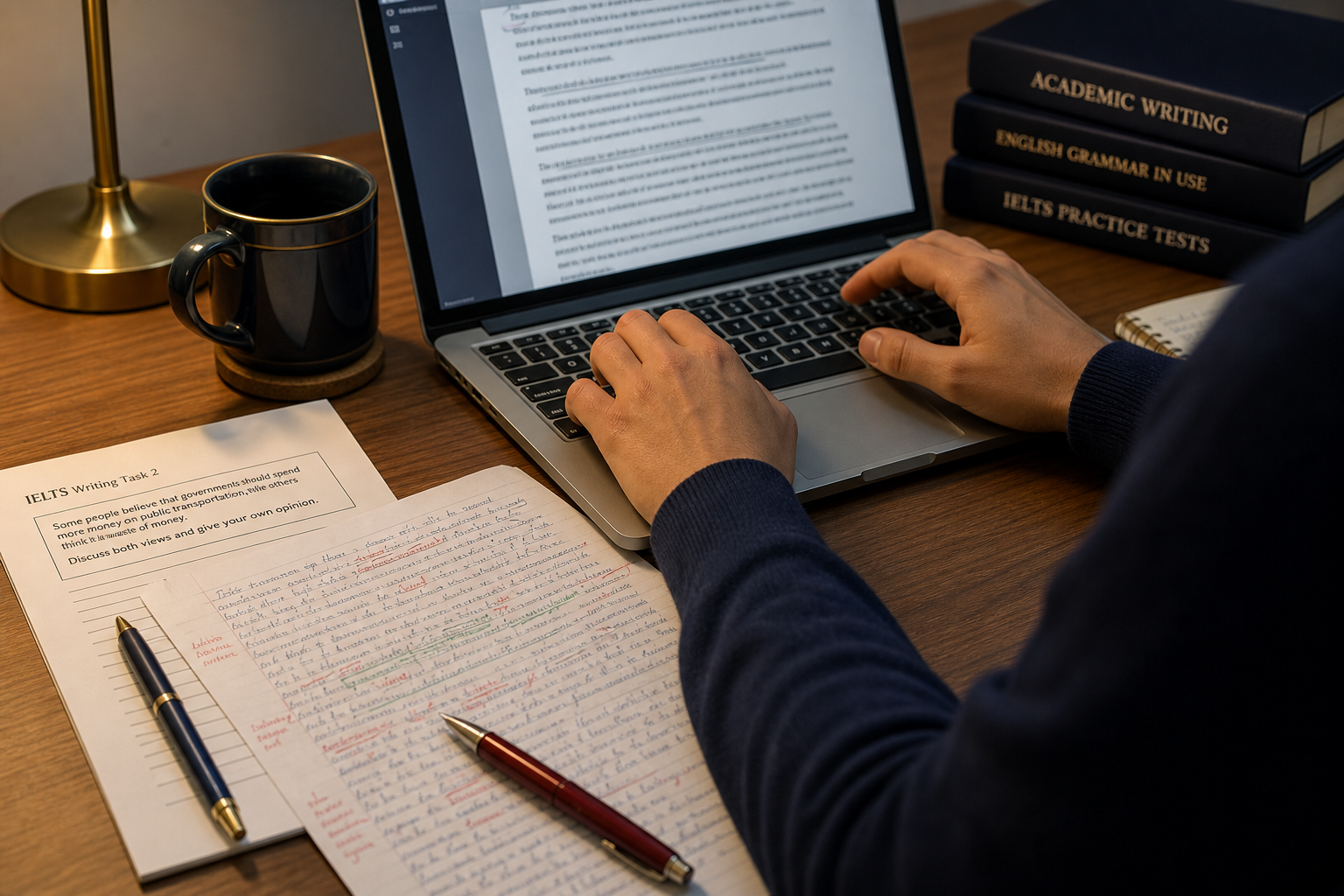
Use a repeatable internal shape: topic sentence that names the paragraph job, two to four sentences of development, optional link back to the question. For a discussion essay on whether high school students should complete community service, paragraph one might argue civic benefit with one concrete example; paragraph two address the counter-argument about curriculum overload; conclusion picks a measured position.
Task 1 is not a list of numbers. Group by time or category: "Renewables rose steadily between 2000 and 2020, while coal declined." Narrating every bar left to right reads like a spreadsheet and wastes words. If the graph shows Melbourne and Brisbane side by side, compare the cities explicitly rather than describing each line in isolation — comparison is what examiners listen for.
Keep linking words functional, not decorative. "Furthermore" at the start of every paragraph signals template writing. One clear connector per paragraph is enough when the logic between ideas is already sound.
Proofreading in the last four minutes
Minute 1: read the prompt and your conclusion only — do they match? Minute 2: hunt your personal top three errors from coach feedback (articles, tense after "since", plural -s). Minute 3: format checks — word count, OET salutation, Task 1 units. Minute 4: fix single words, not whole paragraphs.
Reading backwards sentence by sentence catches homophone slips ("their/there") that forward reading skips. For OET, cross-check every date and medication name against the case notes; transcription errors cost appropriateness marks even when grammar is clean.
OET writing: letters that regulators accept
AHPRA-bound candidates often lose marks on layout, not language. Include recipient address, date, RE line, clear paragraphs for each case-note bullet, and a professional close. A letter to an occupational therapist about a Melbourne patient must distinguish what the patient reported from what you recommend — case notes are messy; your letter cannot be.
Profession-specific coaching in OET Training catches patterns generic IELTS feedback misses: referral vs discharge, urgency language, and when to use full titles.
Building a writing rhythm before you sit again
Alternate task types weekly: Task 1 graph, Task 2 opinion, PTE summary, OET referral. Submit every script to the Practice Portal or your IELTS / PTE coach with one question: "What one error pattern repeats?" Fix that pattern in the next attempt only — not five patterns at once.
Log your minute splits after each mock: how long planning took, whether proofreading happened, which task ran over. Candidates who discover they always steal four minutes from Task 2 for Task 1 can correct that in practice long before exam day. Small data beats vague anxiety.
Speaking under the same time pressure uses different skills but the same discipline — see speaking strategies for English exams. To interpret how writing feeds your overall band or PTE communicative score, read understanding exam score calculation.
Back to Blog Enquire NowWord-count tools in third-party apps may differ slightly from official interfaces. Practise on the same keyboard layout you will use on test day where possible.